

Restaurant app development
Restaurant app development, without the app download.
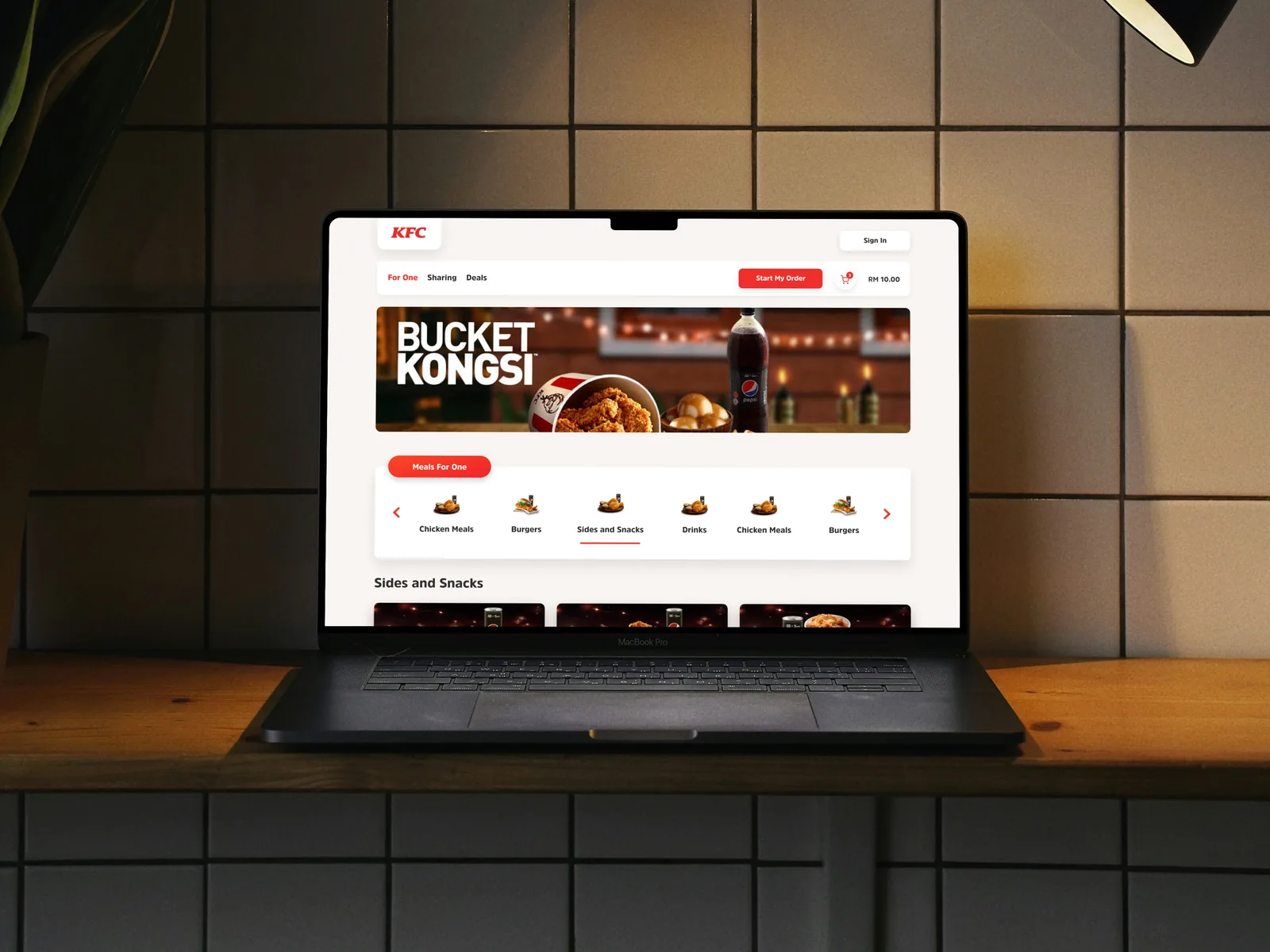
We designed and built web and QR ordering for KFC and Pepper Lunch. Customers scan a code at the table or open a link, order from the full menu and pay, with nothing to install.
Why web and QR first
The install is the drop-off.
Asking someone to install an app before they can order food loses many of them at the app store. Web and QR removes that step, so the ordering experience has to be good enough on a first visit.
KFC · Quick-service restaurant
Every visit is a first visit
With nothing to install there is no account, no history and no stored favourites. The menu has to do all the work on a phone, in one hand: what people actually order up front, and deals where they are seen rather than in a tab.
Full case study coming soon
Pepper Lunch · Quick-service restaurant
The plate is the product
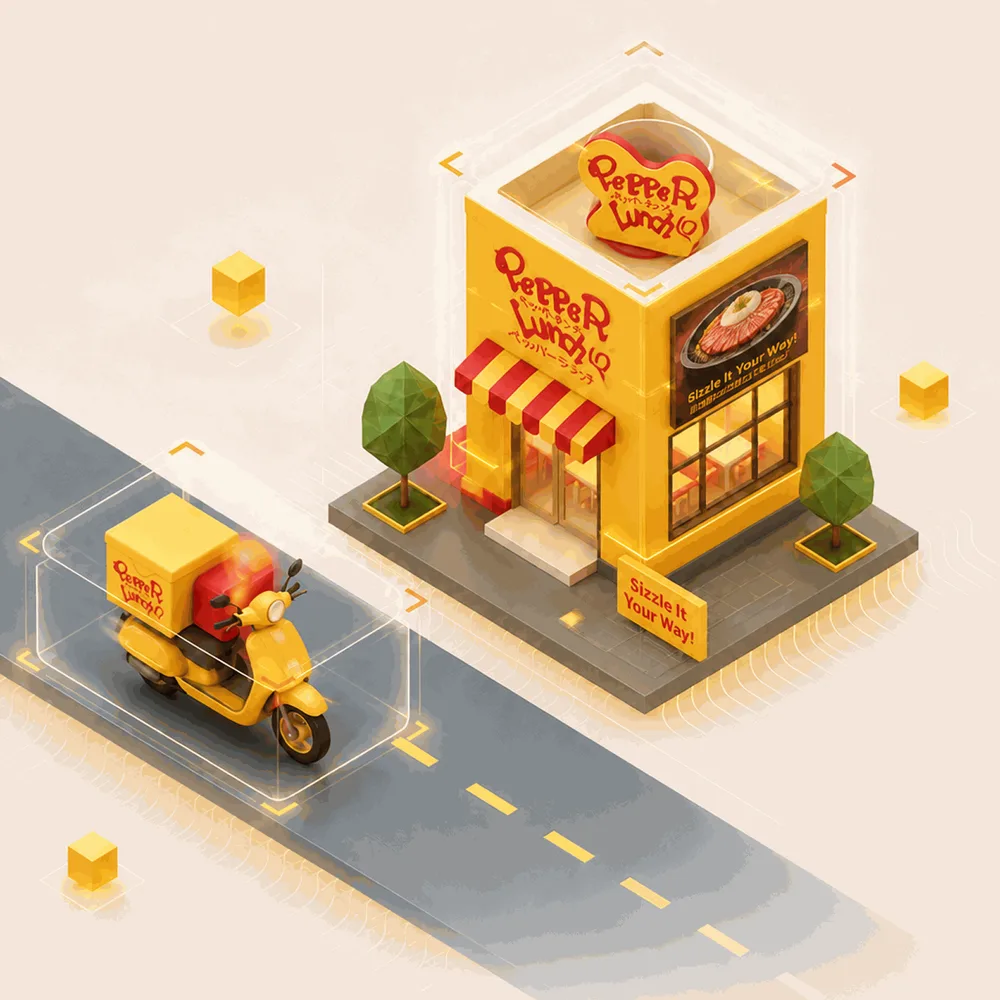
Pepper Lunch sells a hot plate you finish cooking yourself. A plain online menu would flatten that, so ordering is built around a plate customiser that shows what every choice does, the way it would be assembled at the counter.
Full case study coming soon
Features
What restaurant ordering has to do.
QR ordering at the table
The code already knows the restaurant and the table, so the customer never types what it said.
Order ahead from a link
The same flow, opened on the way in, knowing when you want to eat instead of where you are sitting.
The full menu on a phone
A long menu that never makes anyone scroll past food they do not want to reach food they do.
Customisation
Choices that show what they do to the dish, not a stack of dropdowns.
Deals where they are seen
Promotions inside the menu, not hidden behind a tab nobody opens.
Checkout with nothing in the way
No login, nothing to restore. Pay in a tap and the order goes through.
Loyalty and rewards
Points, deals and redemption for repeat customers. We have built them for Get-it and for Beep Plus merchants.
A back office
Orders, menus and content run day to day by the restaurant team, without a developer.
When you do want an app
Web for the first order, an app for the regulars.
A native app earns its place once people already order from you: saved favourites, loyalty, and a reason to come back. We build iOS and Android apps too, on the same design system as the web, so the two never feel like different restaurants.
Cost and timeline
Scoped first, then one fixed price.
We don't bill by the hour. We agree the scope, then give you one number that doesn't drift.
Fair questions
Before you get in touch.
Do customers need to download an app to order?
No. Web and QR ordering works in the phone browser: scan a code at the table or open a link, order, and pay. Asking people to install an app before they can order loses many of them at the app store.
How does QR ordering at the table work?
Each code carries the restaurant and the table, so scanning lands the customer on the right menu with that already set. From there it is the same ordering flow as the website, through to payment.
Should a restaurant build a mobile app or web ordering?
Start with web and QR if the goal is more orders, because there is nothing to install. A native app earns its place later, for regulars and loyalty, once people already order from you. We build both.
Can customers order ahead?
Yes. The same flow works from a link opened on the way in, so the order is waiting rather than queued.
How long does it take to build a restaurant ordering system?
A Build runs 10 to 16 weeks from the first brief to launch, depending on scope. If the flow is still undecided, a one to two week Sprint shapes and prototypes it first.
How much does restaurant app development cost?
It depends on the scope, so we price each project as a fixed scope with one number rather than an hourly rate. Our pricing page shows where each kind of engagement starts.
Who owns the code?
You do. Every build hands over a codebase you own outright, with docs and a pairing week, so you never depend on us to make a change.