

Car rental app development
Car rental app development, from a team that has shipped one.
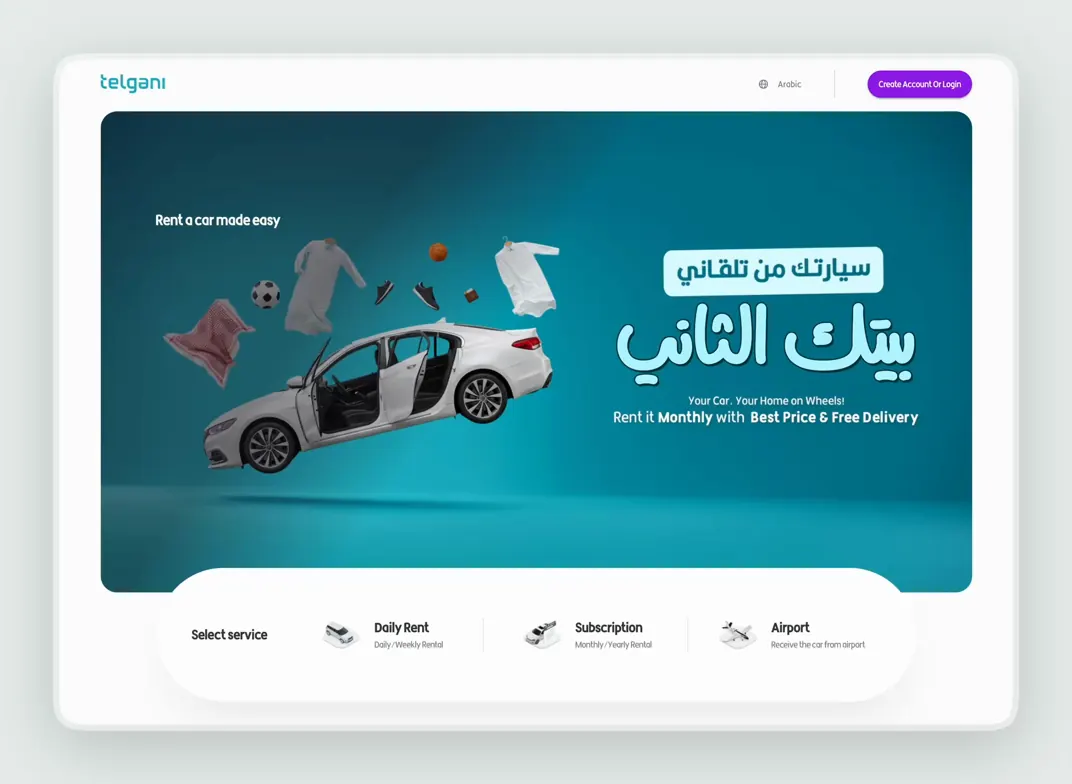
We designed and built the platform behind Telgani, the Saudi marketplace that delivers a rental car to your door: three apps, two dashboards and the landing page in front of them.
Five surfaces, one booking
A rental platform is never one app.
Five different people touch a single booking, and each needs a different tool. We designed all five for Telgani, and we built them.
Customer app
For the person renting
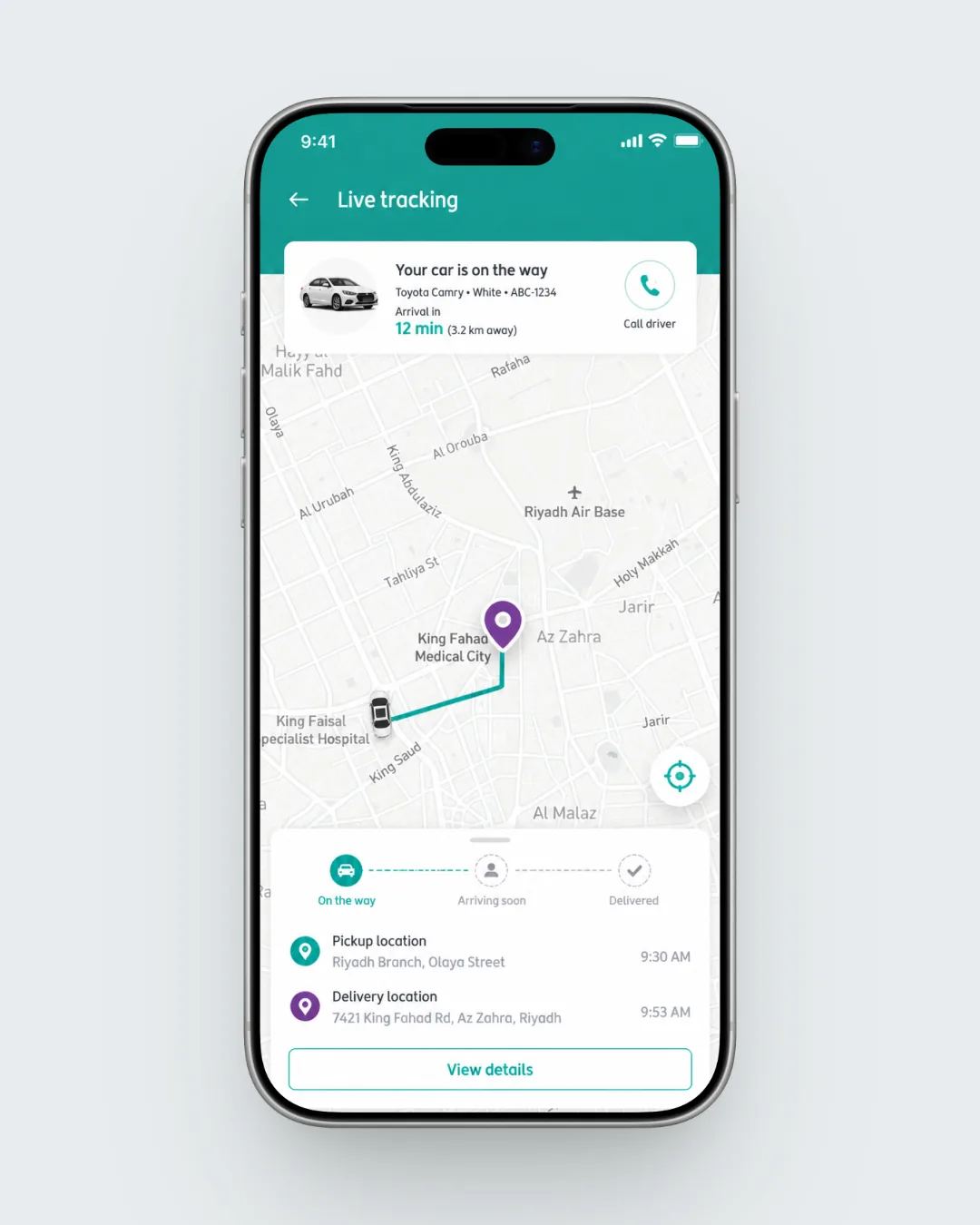
Pick a car from many rental companies, choose delivery, airport or branch pickup, and watch it arrive. The fewest decisions in the fewest steps, because people book in the moments they can least concentrate.
Agent app
For the rental company
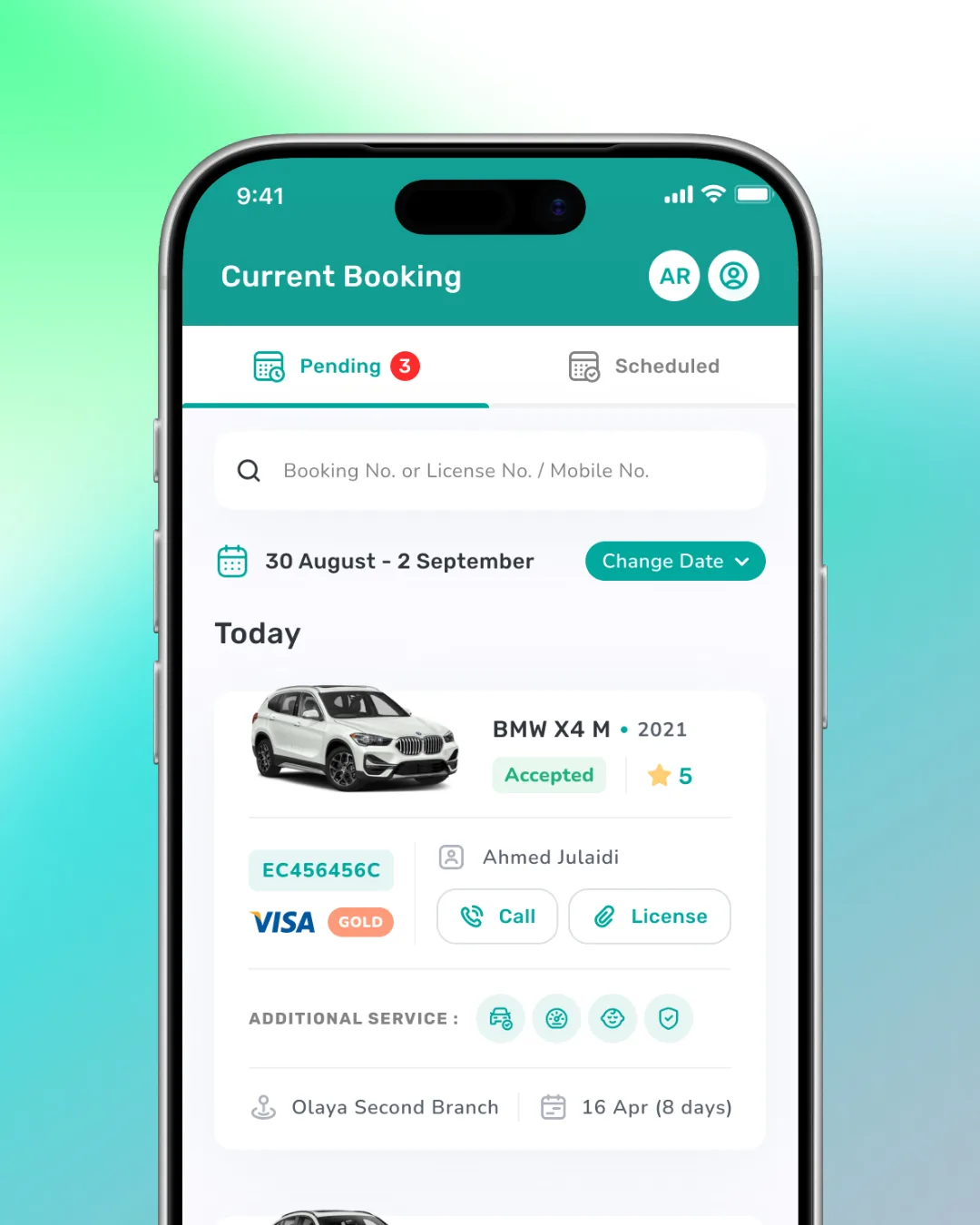
Accept or decline a booking, prepare the car, confirm it has left. Built for one hand, in a yard, by someone who did not ask for a new system, because supply stops if the app is worse than the paperwork.
Driver app
For the person delivering
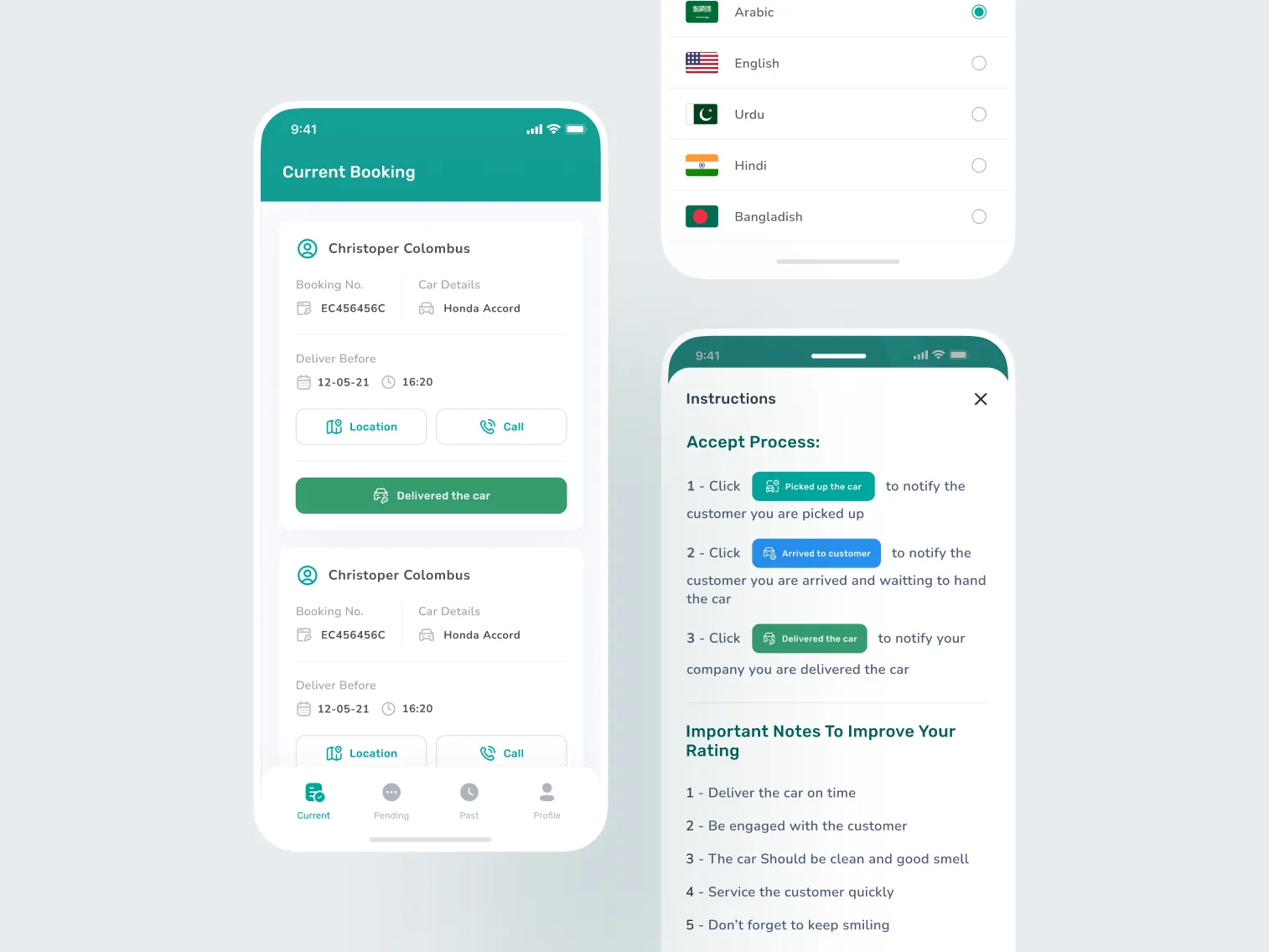
Where the car is going, the state it left in, and the handover that closes the loop. One job per screen, read at a kerbside with the engine running, in the driver’s own language.
Admin and agent dashboards
For the people running it
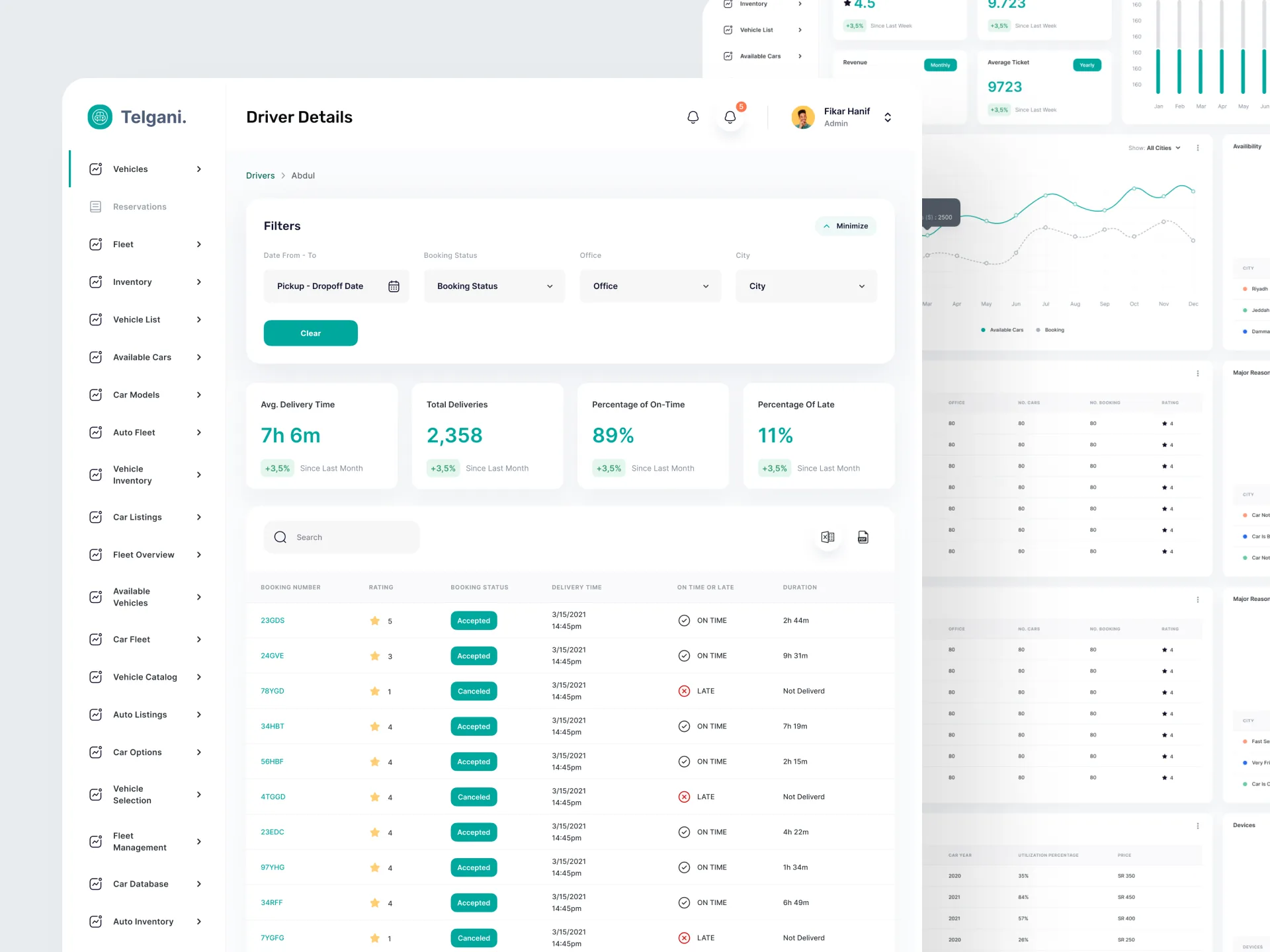
Supply across the network, what is moving, what is stuck, and what needs a person. Dense by necessity, so structure carries the meaning and colour is kept for what is genuinely urgent.
Landing page
For someone who has never heard of you
One job: make the delivery promise believable in the few seconds before someone decides whether to install anything, then get out of the way.
Features
What a rental platform has to do.
Browse across rental companies
One car card with the price, the supplier and its rating, what is included, and how soon it arrives.
Delivery, airport or branch pickup
The customer chooses how the car reaches them before they choose the car.
Live tracking
The car on a map, the minutes until arrival, and a way to call the driver.
Booking status
Accepted, pending or cancelled, readable before any of the detail is.
Profile and wallet
Details entered once, so the booking flow never asks for them again.
Accept or decline for agents
Everything needed to make the decision on one screen.
Fleet, bookings and ratings
The rental company’s cars, the bookings behind them, and how each branch is rated.
Driver runs in several languages
Current bookings, delivery deadlines and step-by-step instructions, with a language picker.
Delivery performance
Average delivery time, total deliveries and the share on time, per driver.
Booking history and payments
Every booking on one page, with the daily rate, service fee and extras broken down.
One system underneath
Five surfaces that feel like one product.
Type, colour, spacing and components are defined once and shared, so a change made in one place lands everywhere. The same team took it from product design to shipped software, which is why the seams don't show.
How we work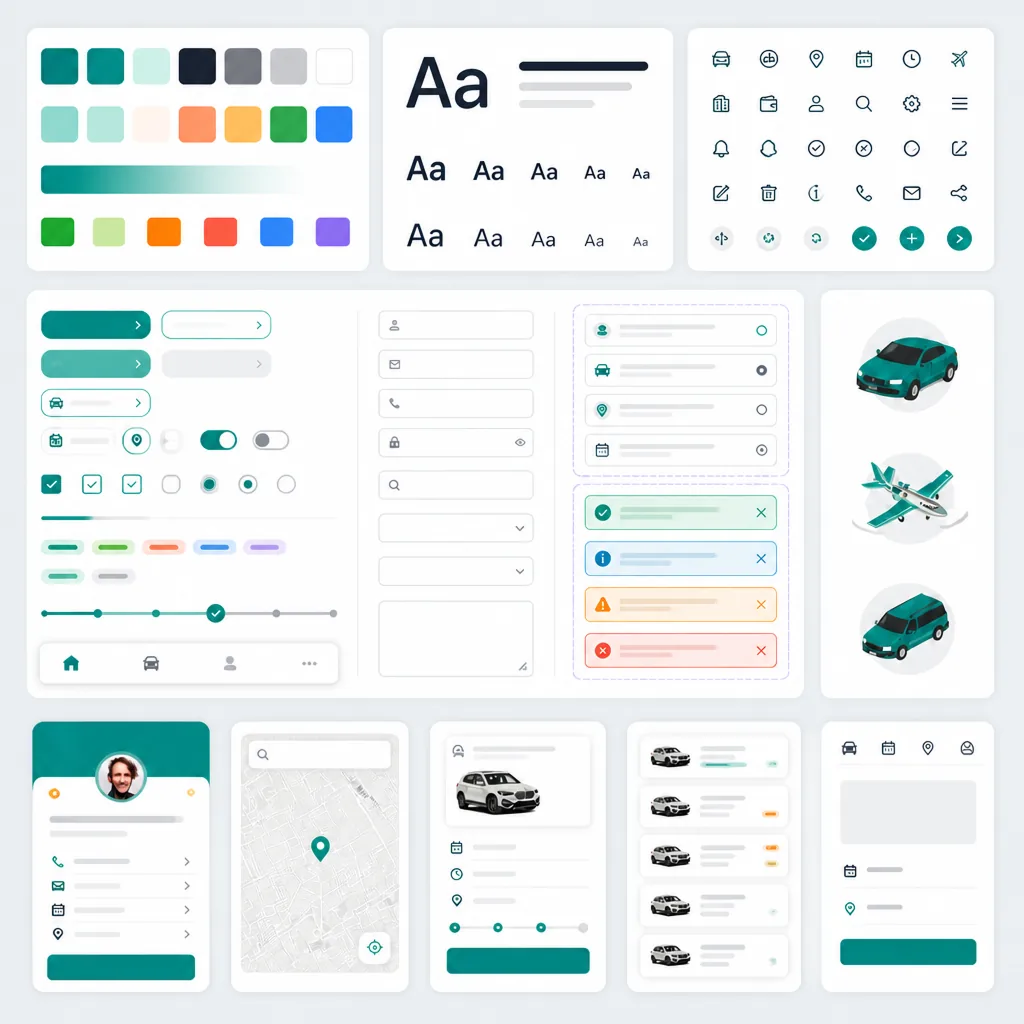
Cost and timeline
Scoped first, then one fixed price.
A single customer app is a smaller build than a marketplace with agent, driver and admin tools. We agree the scope, then give you one number that doesn't drift.
Fair questions
Before you get in touch.
Which apps does a car rental platform need?
It depends on the model. A delivery marketplace like Telgani needs five surfaces: a customer app, an app for rental agents, an app for delivery drivers, an admin dashboard and a landing page. A single rental company with its own fleet may only need the customer app and a dashboard.
How long does it take to build a car rental app?
A Build runs 10 to 16 weeks from the first brief to launch, depending on scope. A marketplace with several apps is usually scoped in a one to two week Sprint first, so the timeline is agreed before the build starts.
How much does car rental app development cost?
It depends on how many surfaces you need and what they do, so we price each project as a fixed scope with one number rather than an hourly rate. Our pricing page shows where each kind of engagement starts.
Do you build for iOS and Android?
Yes. We design and build mobile apps for iOS and Android, along with the dashboards, backend and website around them.
Can the apps work in Arabic and other languages?
Yes. The Telgani driver app, for example, lets drivers pick from five languages, including Arabic, English and Urdu.
Who owns the code?
You do. Every build hands over a codebase you own outright, with docs and a pairing week, so you never depend on us to make a change.
Can we see the work?
Yes. The Telgani case study walks through all five surfaces with the real screens.