

Delivery app development
Delivery app development, for every side of the doorstep.
A delivery product is really three: one for the people ordering, one for the people selling, and one for the people driving. We designed and built all of them for Bee, Brunei's same-day delivery and commerce app, and the driver app and live tracking behind Telgani.
Every side of a delivery
A delivery app is never one app.
Customers, merchants and drivers want different things from the same order. Each gets a tool built around their own day, not a cut-down version of someone else's.
Customer app
Bee · for the people ordering
Bee carries same-day delivery, prescription pickup, overseas forwarding and a local marketplace in one app. They share one home, one cart and one account, and the first screen leads with what you are most likely there to do instead of asking you to pick a mode.
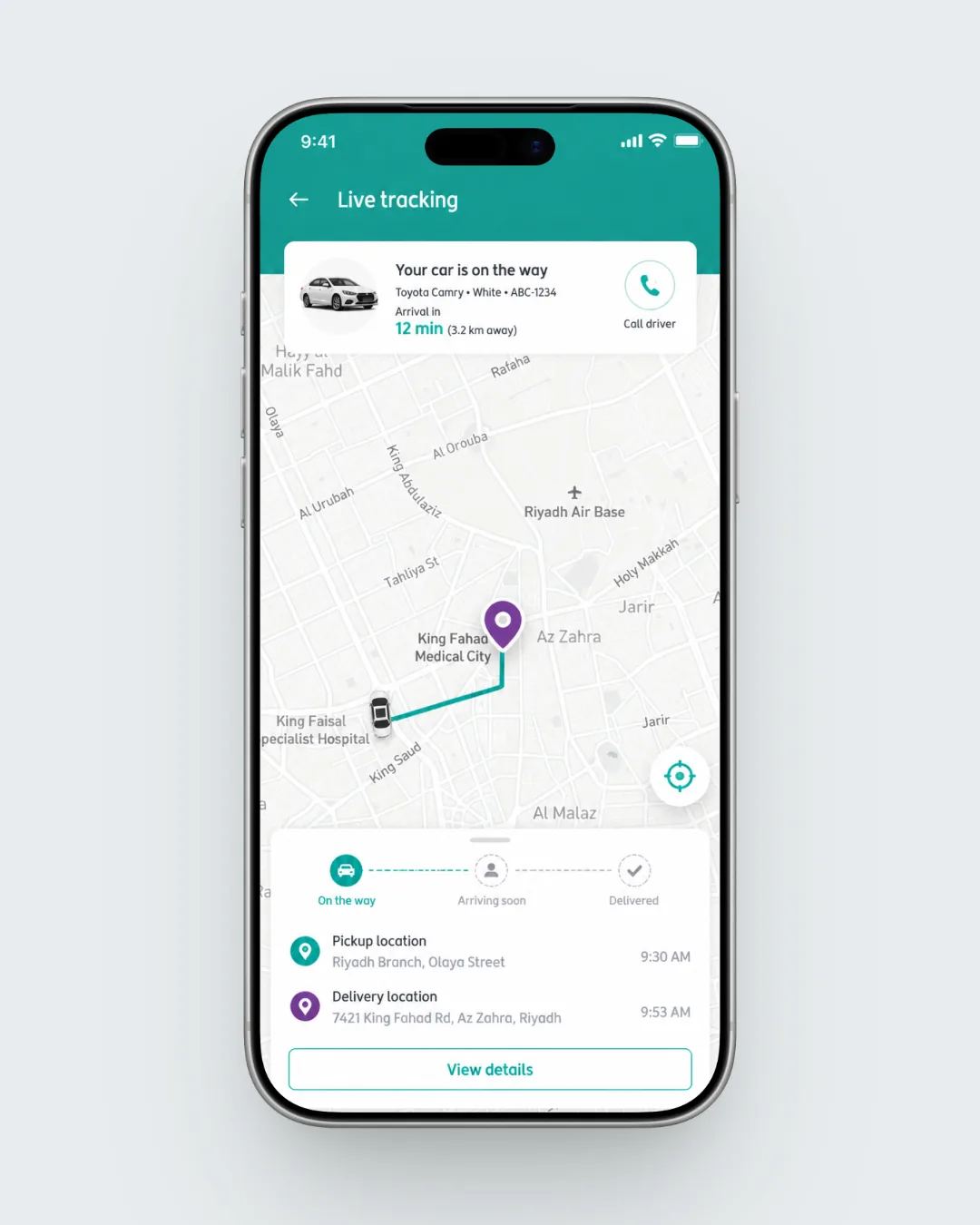
Live tracking
Telgani and Bee · for the people waiting
Where it is and when it arrives, with nothing competing for attention once something is on its way. In Bee it is the same tracking view whichever service sent the parcel, so customers learn it once.
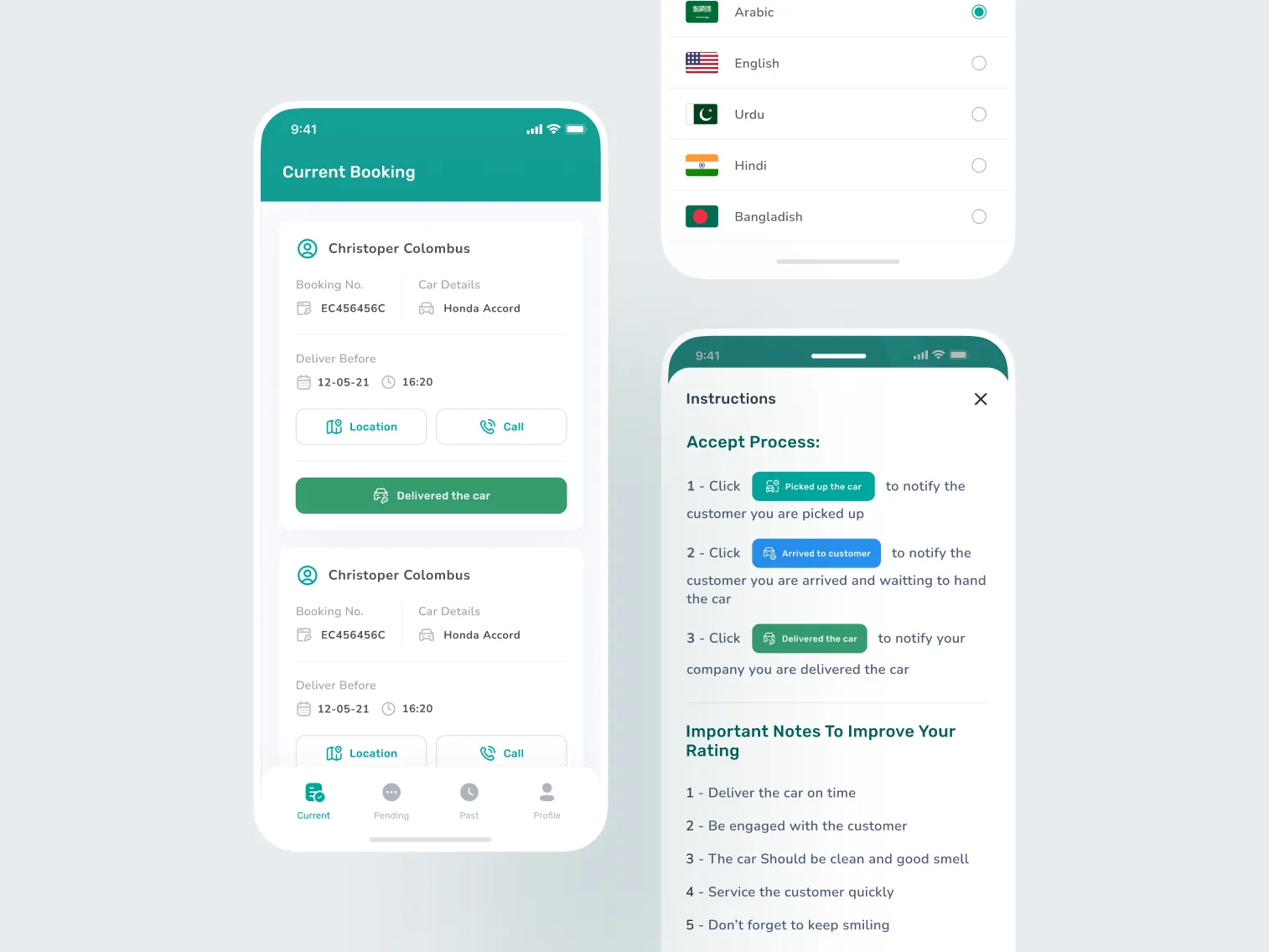
Driver app
Bee and Telgani · for the people driving
Jobs, routes and proof of delivery, built around the driver’s actual day rather than a cut-down customer app. One job per screen, because it is read at a kerbside, and in the driver’s own language.
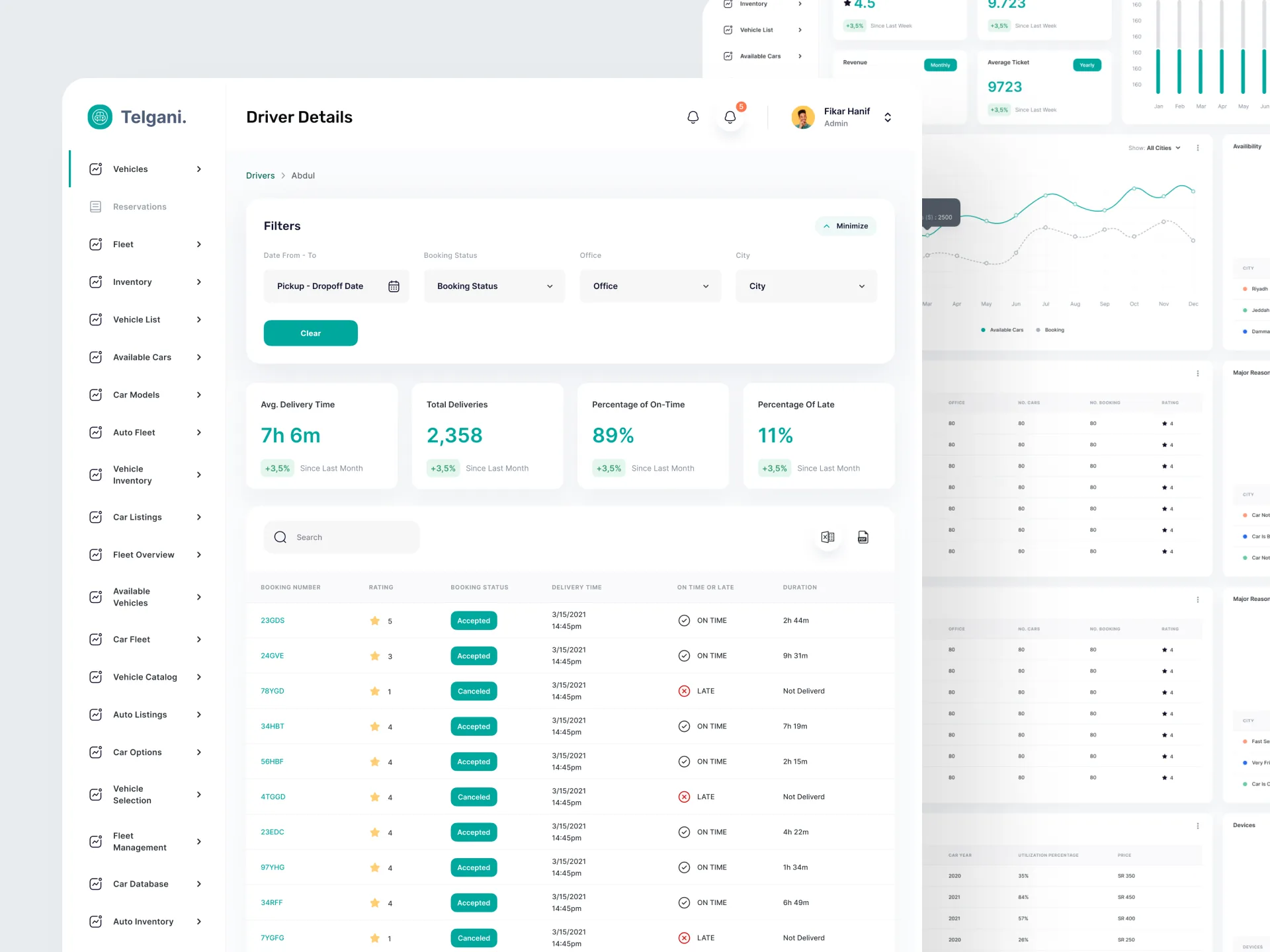
Merchant and operations tools
Bee and Telgani · for the people selling and running it
Merchants get listings, orders and payouts. Operations get the network: what is moving, what is stuck, and how each driver performs on delivery time. Dense by necessity, so structure carries the meaning and colour is saved for what is urgent.
On-demand services
When the delivery is a person.
Instacuts sends a barber or stylist to your home or office. Every other delivery ends at the doorstep, and this one goes through it, so the app shows who is coming and when, with their licence and background checks, before they arrive.
Car rental and delivery: the Telgani platform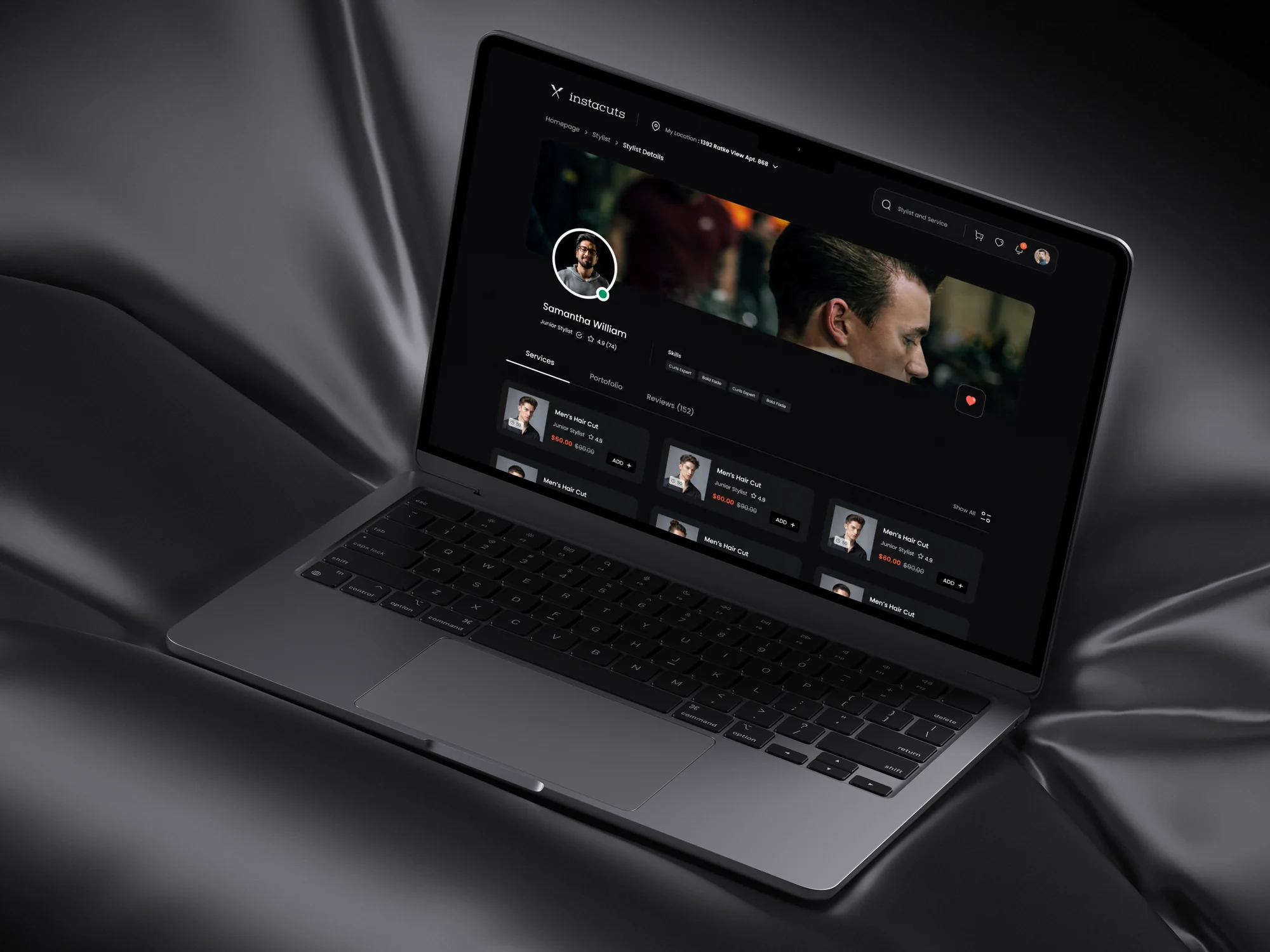
Features
What a delivery platform has to do.
Several services, one account
Parcels, pickups, forwarding and shopping behind one home and one cart.
Live tracking
The arrival time first, the map second, and a way to call the driver.
Driver jobs and routes
The next job, where it goes and when it is due, one screen at a time.
Proof of delivery
The handover that closes the loop, recorded by the driver.
Merchant listings, orders and payouts
Tools built around a seller’s day, not a cut-down customer app.
Marketplace
Local sellers listed in the same app people already use for delivery.
Driver performance
Average delivery time, total deliveries and the share on time, per driver.
Drivers in their own language
A language picker in the driver app, because the people driving rarely share one.
Ratings and reviews
Ratings that answer whether to trust who is arriving.
Referrals
A reward loop at the end of the order, where the recommendation is most credible.
Cost and timeline
Scoped first, then one fixed price.
A single delivery app is a smaller build than a network with drivers, merchants and operations. We agree the scope, then give you one number that doesn't drift.
Fair questions
Before you get in touch.
Which apps does a delivery business need?
Usually three, plus a board. A customer app for ordering and tracking, a driver app for jobs, routes and proof of delivery, merchant tools if other businesses sell through you, and an operations dashboard to run the network. A business delivering only its own goods can often skip the merchant side.
Can one app handle several delivery services?
Yes. Bee runs same-day delivery, prescription pickup, overseas forwarding and a marketplace in one app, with one account and one cart. The design work is making the app change what it offers without changing what it is.
Do you build live tracking?
Yes. Both Bee and Telgani have live tracking: where the delivery is, when it arrives, and a way to reach the driver.
Can you build food, grocery or pharmacy delivery?
Yes. We have built parcel delivery, prescription pickup and a marketplace for Bee, and web and QR ordering for KFC and Pepper Lunch. Food, grocery and pharmacy delivery are combinations of those same pieces.
How long does it take to build a delivery app?
A Build runs 10 to 16 weeks from the first brief to launch, depending on scope. With several apps involved, a one to two week Sprint usually comes first to decide which side launches first.
How much does delivery app development cost?
It depends on how many sides you need and what they do, so we price each project as a fixed scope with one number rather than an hourly rate. Our pricing page shows where each kind of engagement starts.
Who owns the code?
You do. Every build hands over a codebase you own outright, with docs and a pairing week, so you never depend on us to make a change.